
Where to Find the Best Utah Ski Resorts Snow Reports
A focused guide for canyon travelers on the best sources for Utah ski resort snow reports, from live road conditions and avalanche forecasts to official resort data.
Finding an accurate, up-to-the-minute snow report for Utah's ski resorts is crucial for planning a safe and successful day, especially when navigating the Cottonwood Canyons. This guide cuts through the noise by compiling the most reliable sources for real-time data, from official resort conditions and expert forecasts to live canyon road status. Use these tools to check snowfall, lift operations, avalanche danger, and travel times before you head to the mountains.
What are the best sources for snow reports?
A complete picture requires checking a few key sources: a real-time canyon travel tool, a statewide snow dashboard, a detailed weather forecast, and the official report from your chosen resort. For those venturing near boundaries, an avalanche report is non-negotiable.
1. Wasatch Roads
Best For: Getting real-time road conditions and travel time estimates for the Cottonwood Canyons.
Before you can ski the powder, you have to get there. Wasatch Roads is an indispensable tool that answers the most critical question for canyon travelers: what are the road conditions and travel times right now? It aggregates live data from UDOT, resort webcams, and weather services into a single dashboard, helping you avoid traffic jams and understand current traction laws for Little Cottonwood Canyon and Big Cottonwood Canyon.
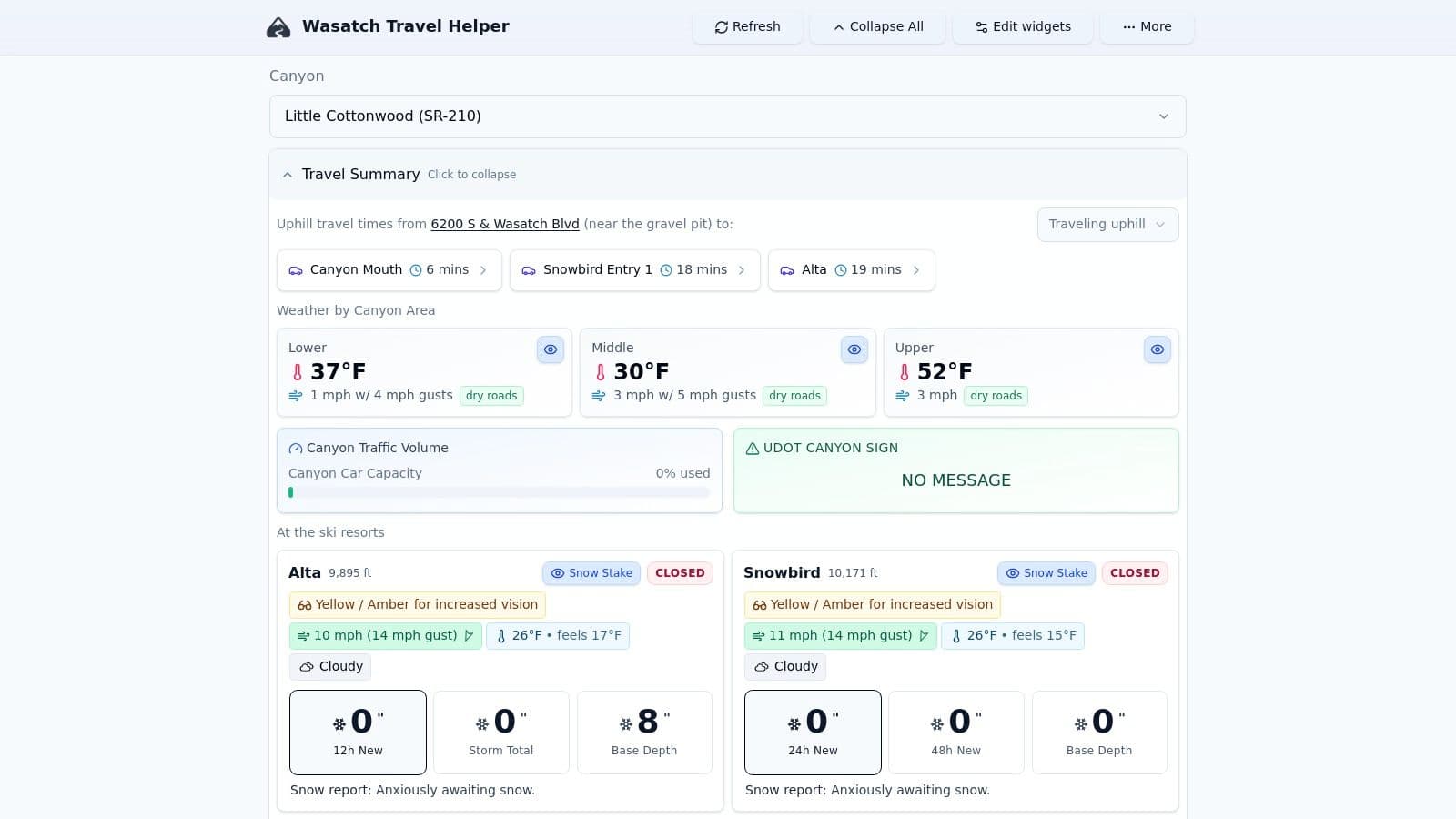
How to Use It: Check Wasatch Roads before you leave home on a powder day. Note the estimated travel times from your location, check the live traffic cameras to see road conditions for yourself, and verify if the traction law is in effect. It’s the best way to decide when to leave and what to expect on the drive up.
Website: https://wasatchroads.com
2. Ski Utah Snow Report
Best For: A quick, comprehensive overview of fresh snow across all 15 Utah resorts.
Ski Utah provides a centralized dashboard showing 24-hour snowfall, base depth, and season totals for every resort in the state. It's the ideal first stop to compare conditions statewide and see who got the most snow from the latest storm. The platform is trusted by locals for its quick, at-a-glance data.
How to Use It: Use the Ski Utah report in the morning to quickly compare which resorts have the best conditions. Sign up for the "Powder Alert" emails to get notified when your favorite resorts report significant new snow, helping you plan your next ski day.
- Link: Ski Utah Snow Report
3. OpenSnow
Best For: In-depth, meteorologist-driven storm forecasts to plan ski days in advance.
OpenSnow goes beyond current conditions to provide expert analysis on upcoming storms. Local forecaster Evan Thayer's "Utah Daily Snow" blog offers detailed insights into storm timing, snow quality, and accumulation potential that automated reports can't match. It helps you decide not just where to go, but when to go for the best powder.
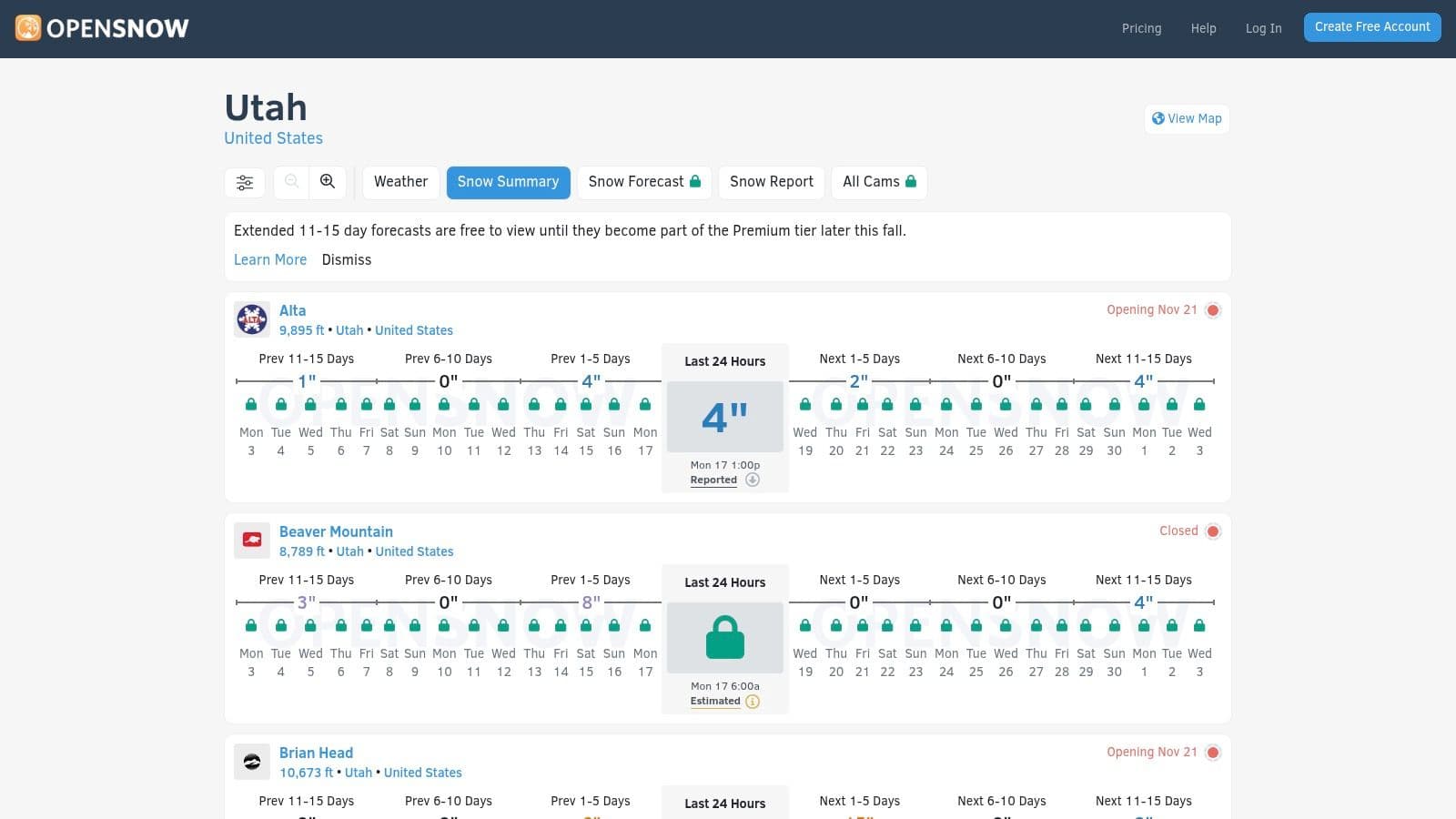
How to Use It: Read the daily forecast to understand how a storm is developing. Use the 5-day and 10-day (paid) forecasts to plan ski trips around the most promising weather cycles. It's the go-to tool for dedicated storm chasers.
- Link: OpenSnow Utah Forecast
4. OnTheSnow
Best For: Blending official data with crowdsourced, on-the-ground reports from other skiers.
OnTheSnow aggregates key data like snowfall, base depth, and open lifts, but its strength is its community feature. Skiers on the mountain can post firsthand reports and photos, giving you real-time insight into what the snow is actually like—is it tracked out, wind-buffed, or pure untracked powder?
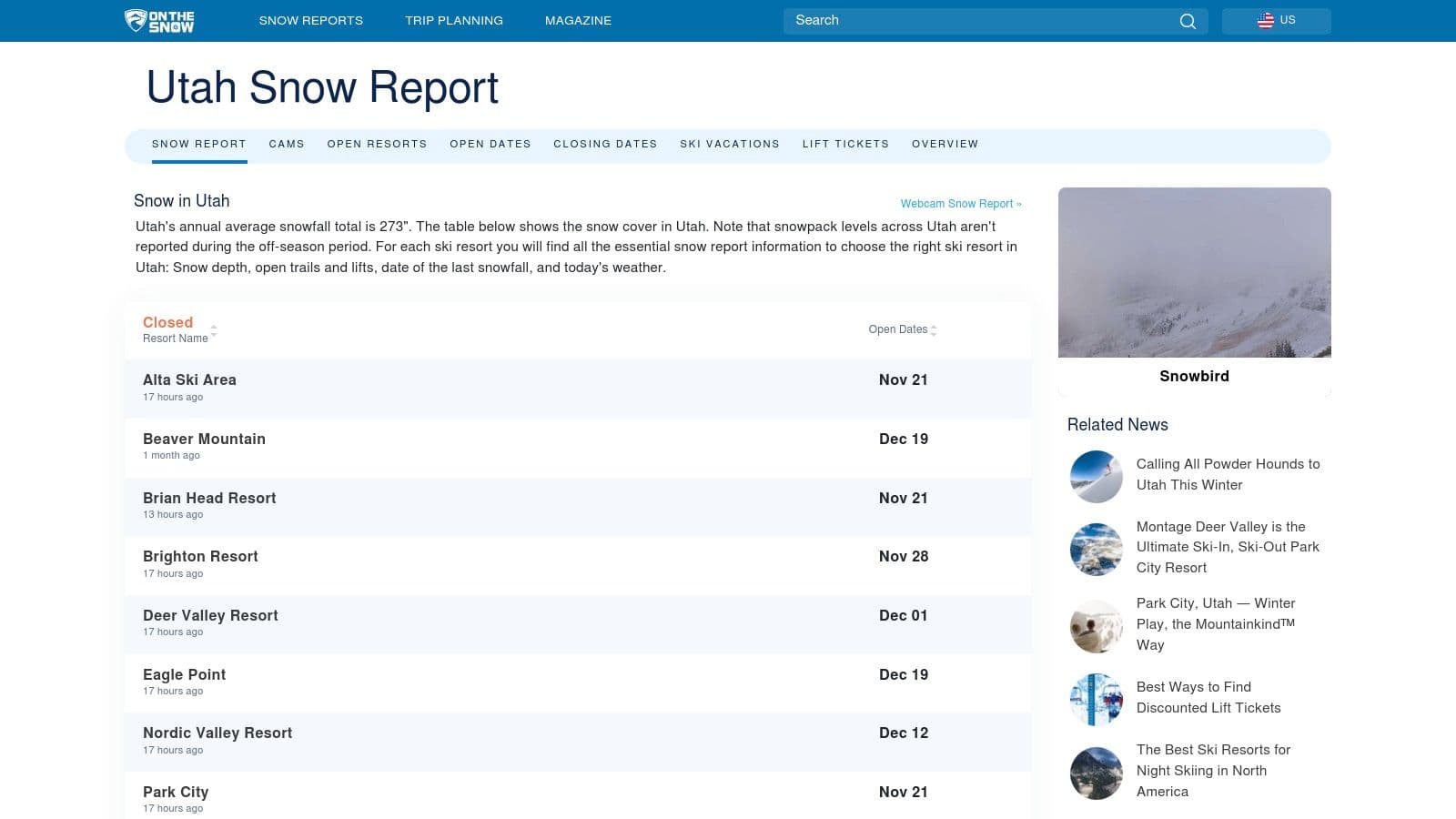
How to Use It: Download the mobile app and check the user-submitted reports for your target resort before you head up. These firsthand accounts can provide valuable context that official numbers sometimes miss.
- Link: OnTheSnow Utah Report
5. Utah Avalanche Center (UAC)
Best For: Assessing snowpack stability and avalanche risk for backcountry and sidecountry travel.
For anyone skiing near or outside resort boundaries, the UAC is a non-negotiable safety tool. It provides daily, zone-specific avalanche forecasts that analyze snowpack stability, danger ratings, and recent slide activity. This information is critical for making safe decisions when venturing into uncontrolled terrain.
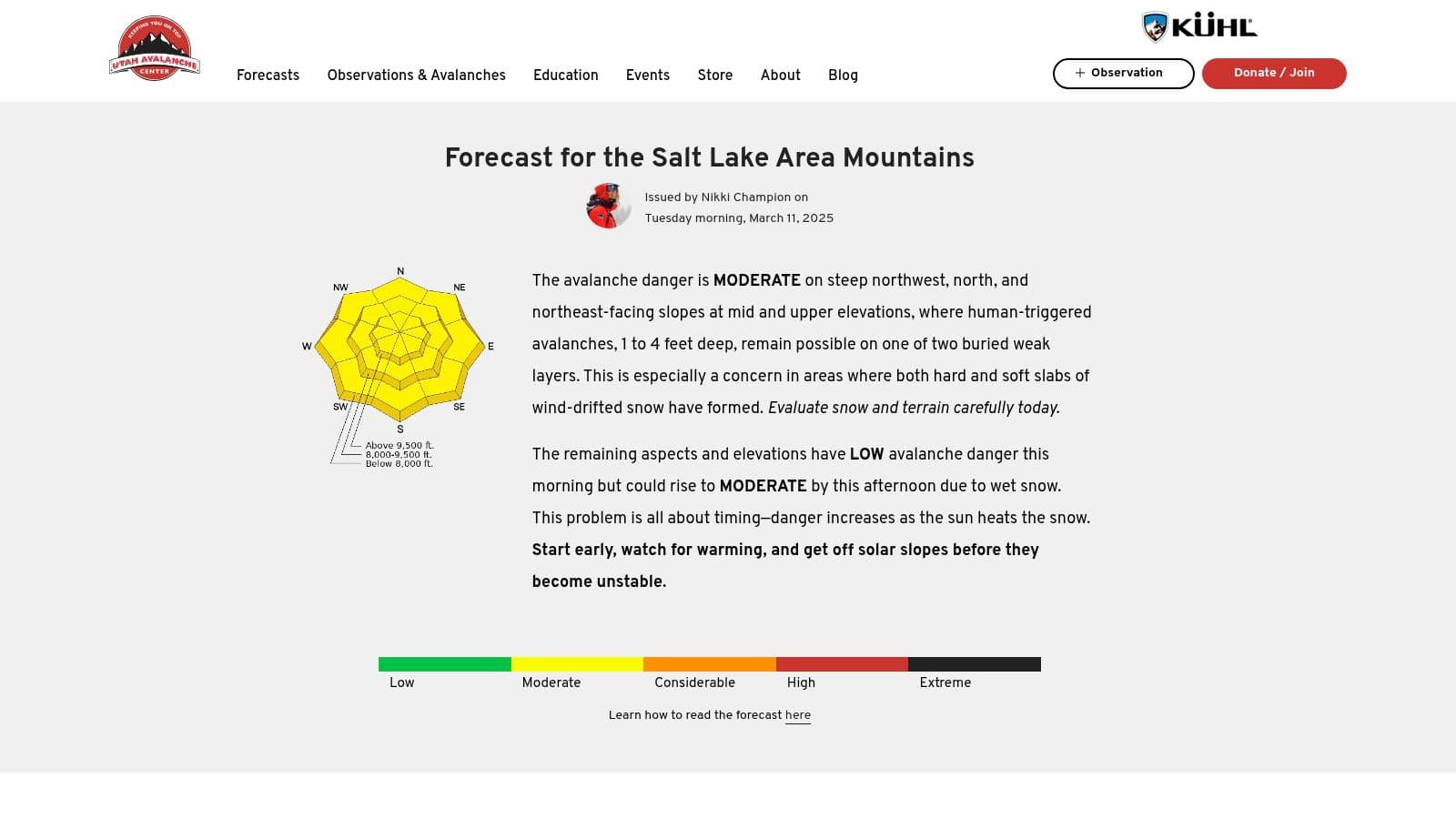
How to Use It: Check the daily forecast for the specific mountain zone you’ll be in (e.g., Salt Lake, Park City). Read the detailed discussion to understand the nature of the avalanche problems and make informed choices about your terrain selection for the day.
6. Visit Utah Current Conditions
Best For: Visitors getting a simple, high-level overview of which resorts are open and have fresh snow.
The official state tourism portal offers a clean, visual snapshot of resort status, including 24-hour snowfall and opening/closing dates. It's less for the data-driven local and more for the traveler trying to answer the first basic question: "Where should I go ski in Utah today?"

How to Use It: Use this as a starting point during the early or late season to quickly see which of Utah's 15 resorts are operational. From there, click through to the official resort sites for more detail.
Where can I find official resort-specific reports?
Once you've chosen a resort, always check their official mountain report for the most accurate, real-time operational status. This is where you'll find live lift and trail status, grooming reports, and wind holds.
Little Cottonwood Canyon Resorts
-
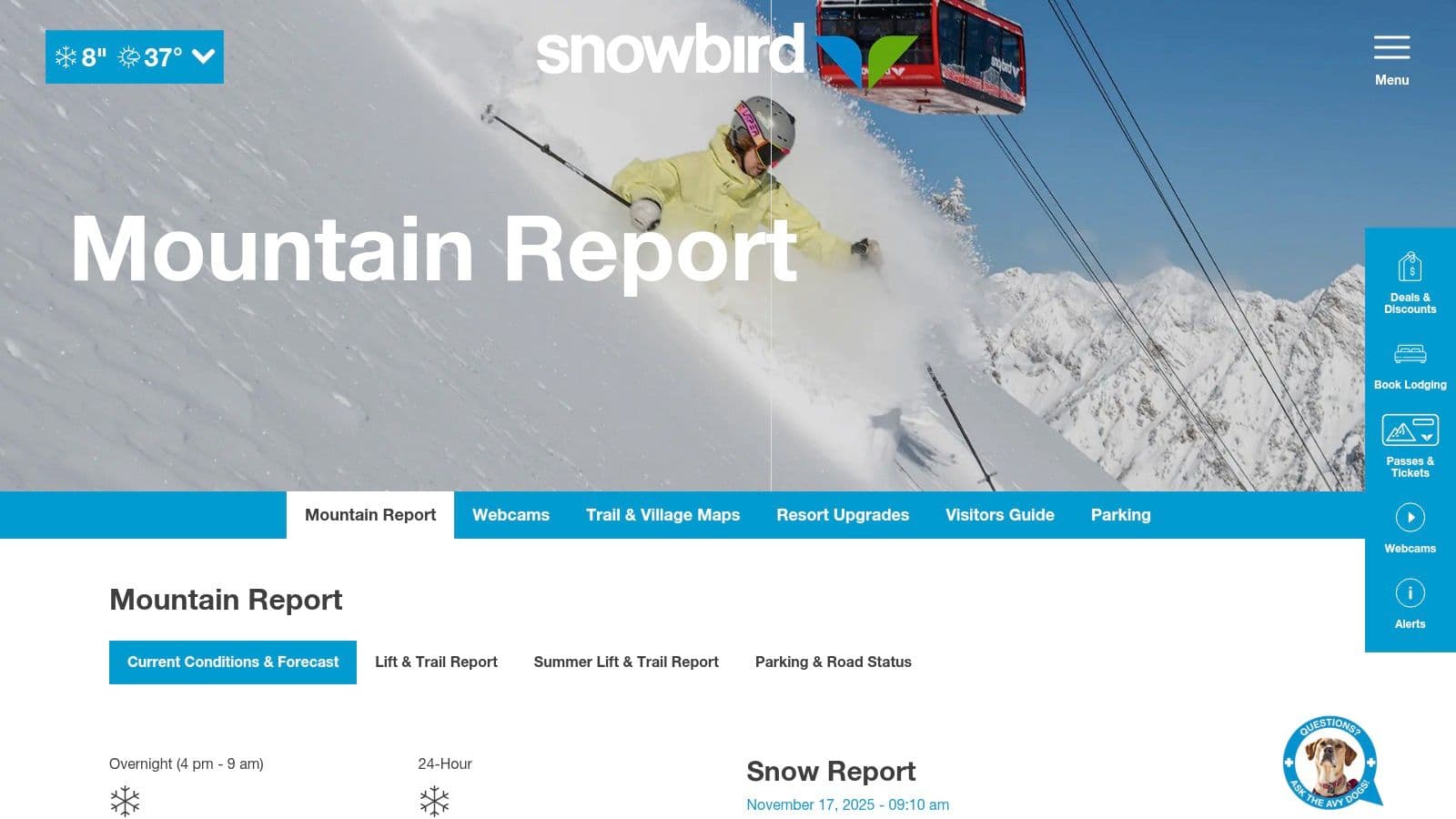
Snowbird Mountain Report: The definitive source for Snowbird's operational status, including live lift and trail data, webcams, and integrated ticket purchasing.
- Link: Snowbird Mountain Report
-
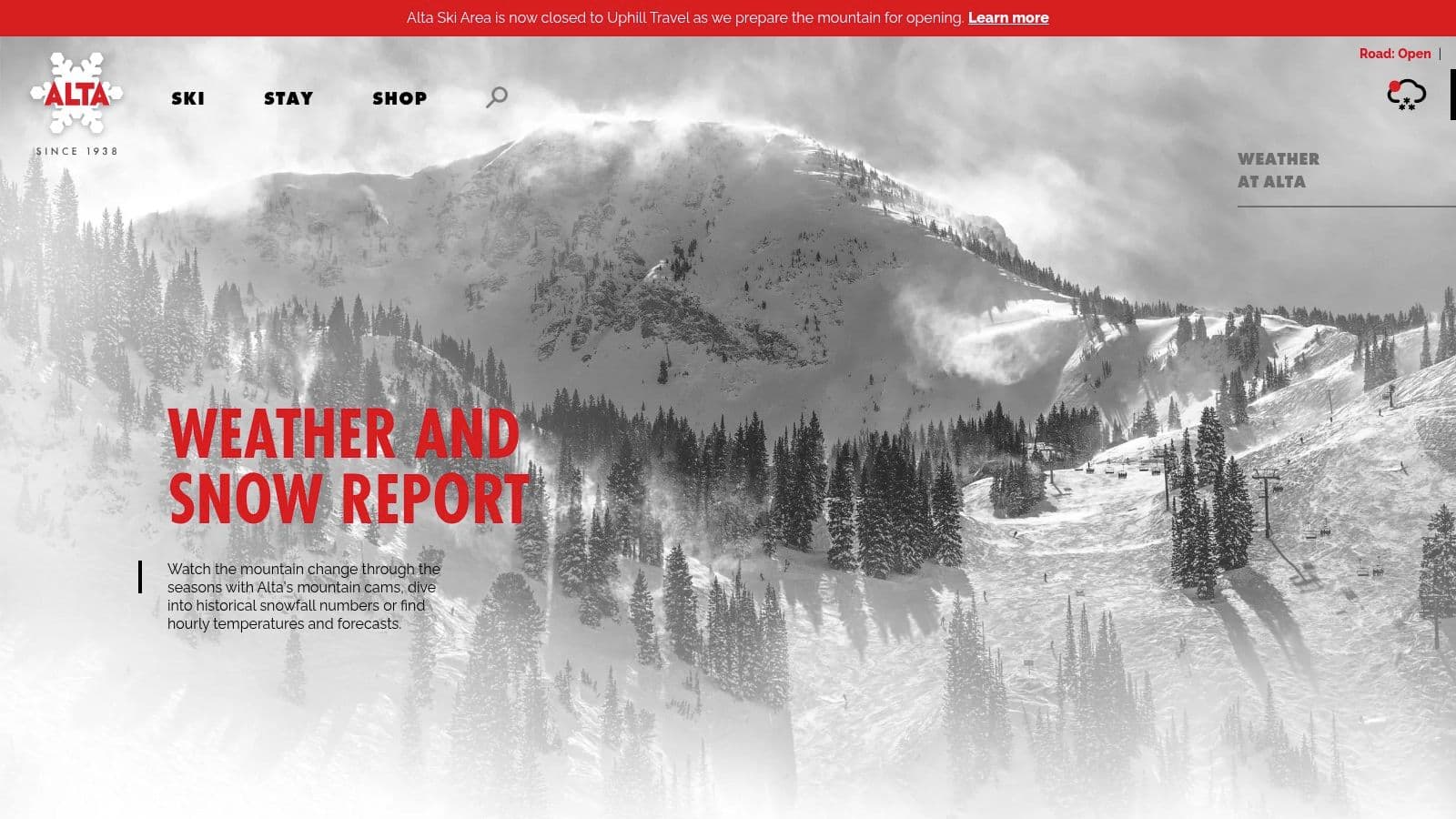
Alta Weather & Snow Report: Features meticulous data from the Collins Study Plot, historical snowfall tracking, and direct links to current road and parking status for this skiers-only mountain.
Big Cottonwood Canyon Resorts
-
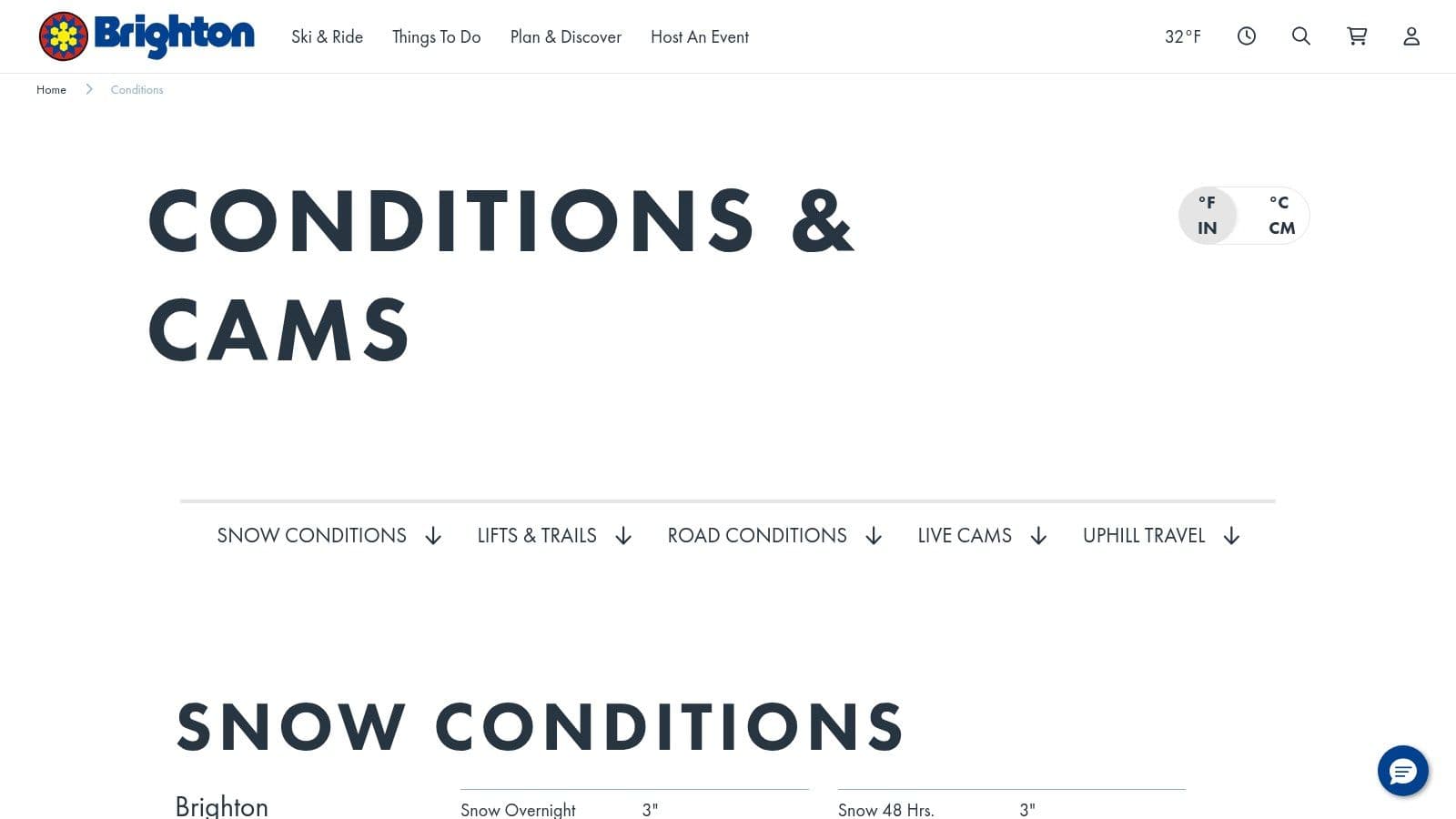
Brighton Conditions & Cams: A no-nonsense hub for real-time lift/trail status, grooming reports, and direct links to UDOT road conditions, making it perfect for locals and night skiers.
- Link: Brighton Conditions
-
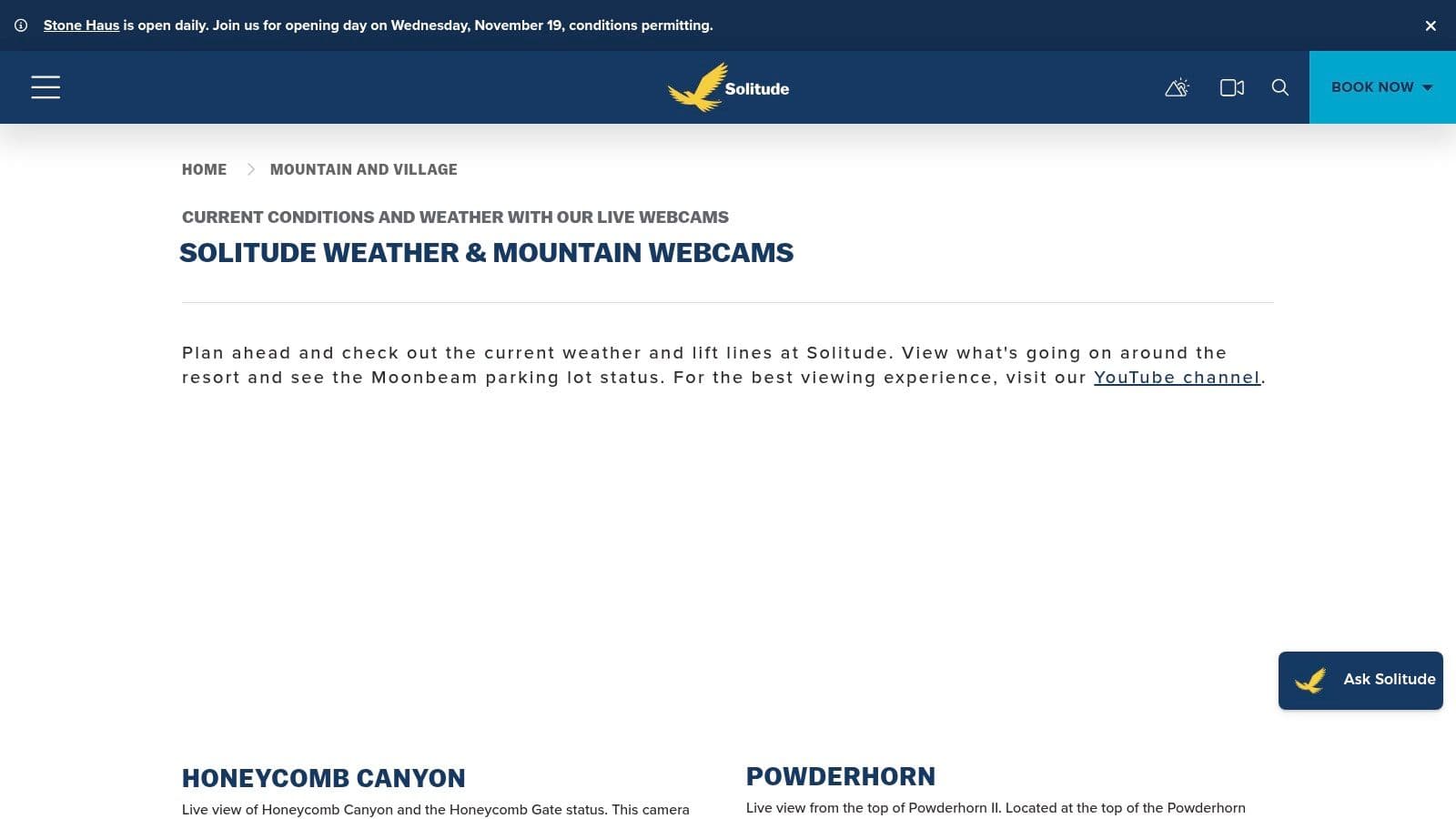
Solitude Mountain Resort Webcams: Excellent for visually confirming conditions via multiple live cams, including a snow-stake camera. The companion app provides crucial real-time updates on parking availability.
Park City & Ogden Area Resorts
-
Park City Mountain Weather Report: Mission control for the nation's largest resort. It integrates with the My Epic app to provide invaluable live lift wait times and an interactive trail map.
-
Snowbasin Snow Report: A one-stop shop for Snowbasin conditions, combining snow data with lift status, webcams, and practical travel and parking information.
- Link: Snowbasin Snow Report


How to use snow reports effectively
The best strategy is to layer information from multiple sources to build a complete picture for your day.
- Check the forecast the night before: Use OpenSnow to see if a storm is coming and what kind of snow to expect.
- Check road conditions in the morning: Before you leave, use Wasatch Roads to see live travel times, road restrictions, and traffic in the canyons.
- Compare fresh snow totals: Use Ski Utah to see which resort got the most snow overnight.
- Verify on-mountain operations: Once you've picked a resort, go to their official site to check for wind holds, lift openings, and parking status.
- Assess safety risks: If you're thinking about skiing sidecountry, your first and last stop should be the Utah Avalanche Center.
By combining these resources, you can make an informed decision that not only helps you find the best powder but also ensures you get to and from the mountain safely.
For the most streamlined and up-to-the-minute canyon travel information, make Wasatch Roads your first click. We consolidate UDOT traffic data, traction law alerts, and resort-specific updates into one easy-to-use platform, so you can spend less time planning and more time skiing. Visit Wasatch Roads before you head for the hills.